My Slacks:
My pants were primarily created using viscose which is a more chemically treated version of rayon. The main centers of production of viscose were (and to some extent, still are) India, China, Thailand and Indonesia. I have to assume that the viscose that was used to produce my pants was made in China to keep costs low. The fabric uses cellulose fiber which requires the cutting down of trees to obtain. Most of the resources within the tree are discarded in order to create this product. This can cause deforestation and negatively affect the biodiversity of the materials harvesting sites. Species that once resided in the forest habitat will be forced to move and adapt to a new environment or they will perish. The pollution created by the factories has also been linked to the death of local aquatic life as it sinks into the local water supplies.
https://www.contrado.co.uk/blog/what-is-viscose/

Viscose is in the process of being phased out due to the toxic chemical, carbon disulfide (CS2), that is used in the production process which has lead to safety concerns for factory workers. Contact with this chemical has been linked to neurophysiological impairment and cardiovascular disease. The factory workers are exposed to this at the point of production only as the CS2 disperses before arriving to the consumer.

The electricity, chemicals, and water used in the plants to manufacture the fabric have a negative effect on the environment. Extracting the pulp from the wood is a process that releases toxins (sodium hydroxide and sulphuric acid) into the local air and water supplies. The plant workers are the first affected but people in the surrounding communities have been found to have heart disease, birth defects, cancer and other health problems related to the release of toxins from the plant. This at first glance appears to be a local impact but it has global implications as the particulates can be transported from one place to another through changing air patterns as well as leach into soil and then water sources around the world.
https://www.theguardian.com/sustainable-business/2017/jun/13/hm-zara-marks-spencer-linked-polluting-viscose-factories-asia-fashion
https://goodonyou.eco/material-guide-viscose-really-better-environment/
The majority of the components of the pants were manufactured and finished in China. The brand The Limited Inc. went out of business one year ago and because of that, I am assuming that the pants were shipped by boat from China for a distance of over 7,000 miles across the globe. None of the products used to make the pants are locally made. The pants were also shipped in a plastic bag that I most likely recycled at a local store but the tissue paper that was packed in between the folds was thrown away in the garbage. The plastic material will at least be repurposed but the tissue will wind up in a landfill to begin the process of biodegrading.
My Shoes:
The rubber from my FitFlop shoes was produced in Vietnam, where the shoes were manufactured. They are now the third largest producer of natural rubber and latex products in the world. This does not come without cost to natural resources within the country that the forests provide. The rubber is procured by obtaining the runny latex from specific plants when cut. In Vietnam they use rubber trees to obtain the material by tapping it as pictured below:

Deforestation and loss of local habitat is an issue in Vietnam due to this large increase in production.
http://www.forest-trends.org/documents/files/doc_4671.pdf
The rubber is then sent to the local factory to be used to produce the base for the sandal by being compressed into a mold. The factory uses electricity to and other chemicals to use the molds and create the end product. This has a negative effect as 22% of Vietnam's energy is produced by coal which is detrimental to the environment as it is burned. Coal burning is responsible for airborne contaminants which linger in the atmosphere and rise to affect the protective ozone layer. This is has a global impact because the ozone layer protects all life on planet earth. The local effect is more noticeable immediately because of the reduced air quality and illnesses experienced by the people.
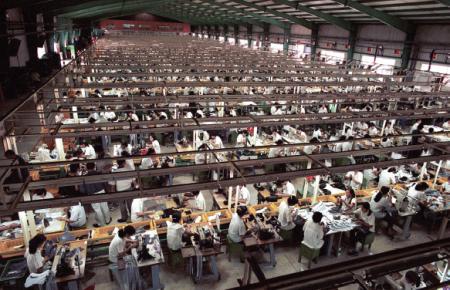
The sandals were produced in Vietnam and traveled by cargo ship to the United States which covers over 8,500 miles across the earth. I then purchased them online from a US based store which was shipped via airplane from the seller's location. The ship produced waste and used energy resources to cross the ocean and the airplane uses a lot of fossil fuel to get from place to place. Both used precious natural resources to get from Vietnam to me. I would consider the leather portion of the sandal to be the most local as we have produced leather products in a tannery that was located in the city of Milwaukee.
As with the pants, I recycled the main container, in this case, the cardboard box that the shoes came in, and discarded the tissue paper. The tissue paper will be forced to sit in a landfill and hopefully biodegrade with little repercussion to the planet.

No comments:
Post a Comment